Showing posts with label teamwork. Show all posts

Wednesday, March 13, 2013

On Board, or Over Board?

Too much info, your new employees will be drowning!

Hi all,

It's been a while, but I've been traveling quite a bit lately, so thanks for bearing with me.

When it comes to building a successful organization, we've already agreed it comes back to the people. First it starts with a leader that has a compelling vision. Then that leader grabs like minded individuals who will be partners to that vision. Then the selection process of everyone that aligns with that vision begins. Once you bring someone on to your team though, the work has just begun.

Employees need a few things to be successful and also happy upon joining a new organization. They need to understand their roles, and they need to understand the company culture they are a part of. If you don't provide these things, you run the risk of setting the employee up to fail, or worse, damaging your credibility with that employee and their network. Here is the benefit of investing in an effective on boarding program...you can cover both of these things.
US and UK employees cost businesses an estimated $37 billion every year because they do not fully understand their jobs, according to IDC

Here are a few areas that you can and should control when developing an on boarding program:


  1. Duration
    • When  you select people to join your team, understand that there is a need on both ends. The department or office needs the new person to fill the void that's currently open, and the new employee needs to be trained to be the person the department or office is looking for. We are guilty of wanting everyone to be factory equipped and ready to roll on day 1. That's just not fair to the new member of your team. On the other hand, you can't take weeks to get someone in the office so that they are "fully prepared".
    • Be moderate in the time your on boarding process takes. You have to balance the need to fill a void with the need to be successful, and you can do that with a process that isn't a millisecond long but also not a century. Traditionally a week is long enough to create initial acclimation to culture, systems, and people, as well as set expectations for future growth and success.
  2. People
  3. The right people need to meet your team...make a good impression!
    • When members of the organization come to see new selections, they are getting an opportunity to see new talent, and also explain what their roles are within the organization. It's a "who's who" introduction within your company. Who should your new selections meet during their on board process? It would be easy to say everyone and anyone. Unfortunately, the way schedules are and the way companies are moving, this isn't possible. Everyone has responsibilities and meeting the newest members of the team isn't always on forefront of their minds. The best way to do this is to divide the introductions into two areas: nice to know, and need to know
    • Nice to know:
      • These are your executives, high ranking members of various departments, and maybe even an emeritus if you have one. You don't need them all to come, in fact you don't want them all there because it's not a productive use of the entire team's time to be at a new employee orientation. One representative per area usually can do the trick. 
      • The visibility of these individuals enable each new employee to see that the company is globally invested in each and every one of its people, to the point that they want to see the new talent coming into the organization. Also, it creates some facial recognition and approachability for new employees, who can see that the even the members of the highest level of the organization are friendly faces who still exemplify the company values to this day
    • Need to know:
      • These are direct supervisors, and people that each new employee will deal with on a consistent basis. Some examples include a member of HR, Accounts Payable, a Benefits Administrator, etc. 
      • These introductions and the explanation of their roles will clarify who to go to when the employees need a specific service. You don't want to be the reason an employee asks their direct manager about when they're being reimbursed every time. You'd rather that go through the proper channels. The on board process is integral in creating and maintaining effective and efficient communication within an organization. Without it, too many people get copied on too many emails that don't even concern them. This drags out the resolution process, and in turn creates frustration between teammates. Head it off at the pass guys. Introductions to the "need to know" will pay off dividends that you'll never need to see to know they're effective.
  4. Content
    • "Manage the message"
      • We hear this a lot in business these days, and it's not a bad thing if the spirit is pure. Meaning, you manage the message to create the right environment for your new employees to flourish. Your employees should feel informed, educated, and most importantly excited with the content you provide them with. Some key areas you should cover in the on board process are new hire paperwork, company policies and procedures, culture, and systems training. If you touch on these areas, you ensure that your team is clear in the expectations set for them by the company from a tactical and cultural standpoint
  5. Mentorship
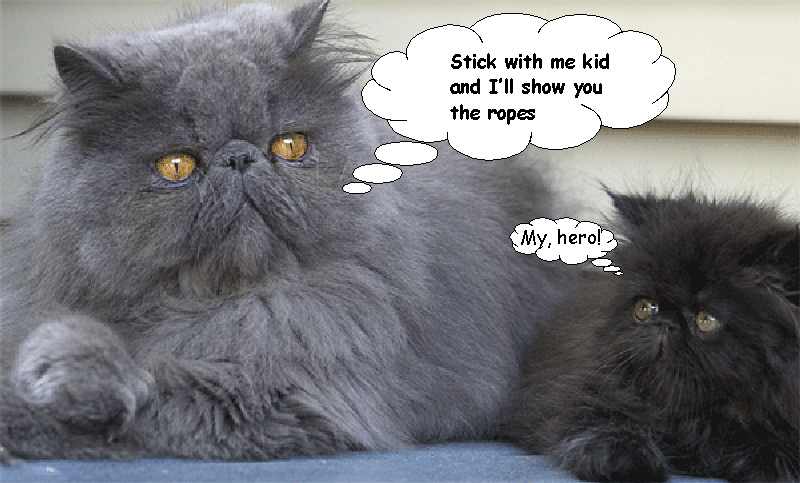
  6. Mentors do wonders...even among felines
    • Mentorship is an overlooked component of the employee life cycle. It's a shame, because individuals who fit this mold can really make a difference in the employee experience. Mentors are "A" player individuals within your company. The ones that you wish you could clone and then clone again. These individuals have unique traits that you hopefully look for in other employees you bring on, but they are the ones that are usually the most excited about and engaged in the company and it's future. Many times they are the most successful individuals you've ever had on your team. Do your best to pair up each individual with a mentor in their RESPECTIVE department. Succession planning comes into play huge here, because if you're identifying your talent and nurturing it, then selecting individuals to be mentors shouldn't be hard. Your performance review and succession planning processes have already identified who your "A" players are, and then they should have mentorship ingrained in them at a relatively early age in your company.
    • Mentors are not just for the on board period. They should be providing status updates and coaching throughout the first 90 days of being on the team at minimum. They are building a relationship that should help the new employee get acclimated to the company, and at the same time give HR and the department manager a pulse on how the new member of the team is coming along.
Ultimately, the on board process can be a game changer for you. Individuals who are better prepared to do their jobs are naturally more successful. But employees who better understand your company's values, culture, and what they stand for are more inclined to be more invested in your company, because it becomes their company as well. Involve every department, whether through development of content or appearances, in the on board process so that you can create global value for the program throughout your organization. The more people that know this program happens, the better and more successful it will be. 

May your on board processes be shorter than a century, and longer than a millisecond. All aboard!

Stay inspired, be developed, be the change!
~AI

Wednesday, February 20, 2013

Seattle tidbits...

Hi all,

It's been a while since I've been here...I've been traveling quite a bit. I spent last week in Seattle attending an amazing conference on the future of dentistry, The Summit. Networking with colleagues, sharing ideas, and discussing systems that will steer groups toward success were the highlight of my week.


This matters, no matter what industry you come from
The beauty of organizational development is that it is a field that transcends industry. Regardless of whether you pull teeth, you operate on hearts, or you manufacture tires, people are people and culture is culture. If you can create an environment that fosters hard work, mutual respect, and accountability, your team can and will be engaged in your mission, vision, and values. It starts with the right leadership and the right vision. Nonetheless, a people strategy matters in every industry. Apple, Google, Zappos!, and the Ritz Carlton are all in different industries. What makes them great though? The same exact things. 

The Director of Training at the Ritz once told a group of us that bench marking for success wasn't about competitors in an industry. Moreover, it's about the organizations that are truly great. Benchmark against the greats, do what they do, and adopt their strategies. There's a reason Zappos! does its own trainings for outside groups: what they have is universally adoptable, and it transcends industry. Culture is culture, people are people. OD and what we do will and should matter to you, because it affects you, no matter your craft. 

We've been talking about mission, vision, values, and lastly talent strategy. I'm feeling like we should keep walking through the employee life cycle, and so retaining your talent will be our next series. On-boarding, performance management, accountability, tough conversations, all of this is key if you're keeping the right team once you bring them on.

Stay inspired, be developed, be the change!
~AI

Thursday, February 7, 2013

Goldman Sachs...Perception vs. Reality

Hi all,

Hope everyone is doing well. Happy February! 

Posted a link to an article I read a few months back, but I'd love to share. Last month we spoke about how to build a culture. A former employee of Goldman Sachs came out last year with a scathing opEd in the New York Times about the company. I've attached both his article and the response from the Executive Vice President of Human Capital.

So tell me guys, who's right here? Perception vs. Reality is a time old struggle...here it is again. Fire away in the comments section!

Greg Smith OpEd, NY Times

Goldman Sachs Responds (Video)

Stay inspired, be developed, be the change!
~AI

Monday, January 21, 2013

The Seats on the Bus..."Involve me, I will understand"


3. "Involve me, I will understand"

He wants to know who you selected..tell him
Alright! So now we’ve laid the foundation for what we want in a candidate by defining the needs and wants of the role, as well as committing to selecting candidates for roles we have prepped for them. It’s time for the interview process to start. This is the most critical component of the selection process, because now you’re linking theory to practice. Everyone needs to be on the same page, especially in smaller organizations. One of the most frustrating things for any department or small organization is hearing about a new member of the team for the first time…AFTER they’ve been selected. “Well am I going to like this person? What’s their background? How did he/she get hired?” All of these are valid questions. Let’s nip the gossip in the bud by remembering one thing: global involvement = global accountability.

When you want to bring new talent to your organization, let your team know about it. For larger organizations, it’s usually a department selection, and department heads should announce what they’re looking to bring on to their team. If you’re in a smaller organization, letting department leaders know what you’re looking for, you can give them the heads up. The second half of making them aware is offering them a chance to be involved.  There was a Chinese proverb that was told to me once by a mentor of mine:

“Tell me and I will forget
Show me and I may remember
Involve me and I will understand”

Involve the team...you won't regret it
When you offer your team, whether other department leaders or members of your department, a chance to be a part of the selection process, you immediately do two things: create trust, and create investment. We all want to be depended on in some capacity. It’s human nature to feel that connection with others. In involving your team in the selection process, you let them know that you value their opinion in bringing someone in that will affect the culture, performance, and overall dynamic of your organization at either a macro or microcosmic level. Trust is the framework upon which a great relationship is built, and that goes for the one you have with your team. This is an easy way to nurture that relationship. Also, you remind your team that it isn’t just your team, but their team. Investment is the key to engagement. Engagement is the key to performance. It’s amazing how telling them to weigh in on a candidate in some capacity will motivate them, and also help you make an informed decision that is in the best interest of your team.

At the same time, we’ve got to be practical in our involvement of our team. They have jobs to do, and if they are involved at every level of the process, you’re hurting productivity. My personal recommendation of where I have seen this to be successful comes in the final stages of the selection. A panel interview where the candidate meets the team and the team meets the candidate is very helpful. The team gets to ask their questions, and at the same time you have put a candidate before them that you are confident in, because the candidate has run your “selection gauntlet”: They have passed an HR screen, yourself as the hiring manager, and any other pieces of the selection process that you have at your organization. Your team has a wealth of information in front of them about the candidate to help them in their assessment. It’s not that it’s fail proof, but at the same time, it almost is, and that is fine. We want to get the selections right without disturbing the team dynamic. Involve the team, and the team understands.

Home stretch next week team! Stay with me and let's get a dynamite selection process together!

Stay inspired, be developed, be the change!
~AI

Tuesday, January 8, 2013

The Seats on the Bus...Past, Present, Future


Hi all, 

Picking up from where we left off, we begin discussing talent selection strategies. I gave you four different areas we'll talk about that will help you bring in the talent you need as an organization. They were:

  1. Remember the Past, Want the Present, Plan the Future
  2. Right Bus, Right Seat
  3. "Involve me, I will understand"
  4. Build the gauntlet, trust the gauntlet


Remember the Past, Want the Present, Plan the Future

Remember what you need that past performers couldn't deliver
When we look to bring on new talent, there’s obviously a myriad of reasons as to why. Usually it’s that you’ve lost or promoted good talent, gotten rid of an underperformer, or saw a need for a new position. Regardless, when you look to select someone to fill a role, we’re always thinking about what the past person didn’t have or didn’t do. Is this a bad thing? Not necessarily. You should always be looking to fill gaps with new talent, because you don’t want a repeat of the last person, even if they were good. If you want the same exact thing you had before, it means you’re content with the status quo. Greatness is always about taking the next step, and so you should start your search thinking about what you needed that would have helped you back then. However, understand that this is just one piece of the puzzle.

Hire for what challenges you face today
Present wants should build on past needs. It’s not just what you needed to have someone be successful in the role that wasn’t present, but also what you will want in order to meet today’s challenges. Remember that whatever obstacles you faced in year one of your company are different (at least you hope so) than what you’re facing in year five. Even if the obstacles haven’t changed, the present wants and past needs are aligned but are not the same, because the issues have compounded. When you look to bring in new talent, build a checklist of the challenges your current landscape or climate are presenting you with, and what traits or skills you want the person to have that will help you meet them.

Select for the future! Foresight never hurt anyone
Once you’ve built a set of past needs and present wants, it’s time to get back in your Dolorien (Back to the Future reference if you missed it…it was the time machine), and start looking forward. The gift of foresight is not easy to master, but it isn’t impossible to paint a picture of what the future looks like either. You had to do it for your organization’s vision, values, and culture, why not the people and roles you need to execute? One of the issues that may have caused this need for talent is you did not foresee the challenges that would come as the role and or the company began to evolve. I have personally seen this happen in some organizations, where someone is brought in to do a specific role, but a change in company direction, for whatever reason, puts the employee in a situation where they are completely under prepared for the task at hand. You need the right person at that point, and the current employee just won’t cut it, so you make a change. You cannot be an oracle and nail it on the head of course, but knowing what you want your company to be, what you want to role in its final form to look like, and what expectations you have for the highest performer you could ever ask to take the role will help you in your search. Keep in mind, the future may be now for the position, meaning the present wants and needs of the past may be exactly what the future needs and wants are. If that’s the case, you’re set. In any case, try your best when thinking about a role to give some time to what it should look like 3-5 years from now. At worst case, you’re incorrect, but at least you prepared a path and could communicate that expectation to new talent, so they know what they’re getting themselves into. Not a bad concession at all. 

Below is a basic example of a hire table for an executive assistant:
Past Needs
Present Wants
Future wants and needs
Able to file efficiently/stay organized
Good phone etiquette/prompt follow up
Manage up, hold CEO accountable to commitments
Computer savvy
Manage schedule effectively
Executive brand integrity

Just some things to think about as you look at the role. You've got to know what you want before you ask for it. Expectations pave the way for accountability and growth. 

We'll get to the the rest of the points in our next chat. 

Stay inspired, be developed, be the change
~AI 

Thursday, January 3, 2013

The Seats on the Bus...(Part 1)


Happy new year all! I hope everyone is doing well. Excited to talk about the next area that really will drive your organization: the people. This will be a 4 part series, because each part of this is so critical in order to get the team you need to help you drive that vision. So let's get to it!

Once you start to lay the infrastructure for what your organization to look like, it’s a good time to pat yourself on the back. A compelling vision, a strong set of core values, and the expectations of the cultural landscape you intend to implement are all difficult tasks to accomplish. Ultimately though, all of this is theory. These are all the words that have been spoken by the executive team and their leader. In order for these words to translate into works, we need individuals that not only feel the same way, but can execute in step with this infrastructure. In short, linking theory to practice, the time old struggle between good and great anything, will be your greatest challenge. So where do we start in order to ensure we can bridge this gap? You got it: Talent selection.

How do we select the right talent? If there was a perfect science that was easily implemented, we’d never have to worry about our organization’s health. Why? Because the right employees do three major things for your company: they perform their jobs at a suitable level, they either establish themselves as depth in your leadership pool or groom you potential leaders, and they affect your bottom line and your culture because of it. That being said, I think all of us can raise our hands when I ask how many of you are lacking these people in our organizations. Lacking doesn’t mean you don’t have the talent, because some of your people are doing this. It’s just that not enough people fit this bill…and you can never have enough of the “right employees”.

So now, let’s get back to our question of how to select the right talent. From my experiences, I see four overlapping concepts that will steer you in the right direction when it comes to selecting the right people:


  1. Remember the Past, Want the Present, Plan the Future
  2. Right Bus, Right Seat
  3. "Involve me, I will understand"
  4. Build the gauntlet, trust the gauntlet
We have a unique opportunity through this process to select talent that can transform our organizations. It takes a little faith, a little luck, and a whole lot of integrity to make it work. Happy reading!

Be inspired, be developed, be the change!
~AI

Sunday, December 30, 2012

Culture: The Warm and Fuzzy Fallacy (Part 2)

Ok everyone. Happy holidays! I hope you enjoyed some time away from the office. We all need it.

Last time we spoke I was talking about culture, the myths associated with it, and which components of the employee experience shape the culture. It isn't just the warm and fuzzy, the fun and outgoing. It is cold, hard business morality and ethics and that drive a culture. To recap quickly, these are the 5 areas we look at in defining the employee experience:

1. Interpersonal interactions (peer to peer)
2. Supervisor-employee interactions
3. Work load
4. Work ethic
5. Work environment

We went through the first two, so we'll pick back up on number three.
Mission Impossible

3. Work load

The work that you expect of your team plays a role in the experience they have when they work with you. It sounds simple enough. Tell them what you want them to do, and they'll do it. How hard could it be? As we're seeing more and more, it can be very difficult to do this, and that creates a strain on the employee, and on you. If the parameters of a role are not clearly outlined at the time of selection, you put your employee in a sticky situation. What am I supposed to work on? What is time sensitive, and what is a "nice to have"? Do they really know what they expect of me? These are all the questions you get when your first stab at laying expectations goes sideways. Without clarity, the work load becomes frustrating, because your team doesn't know what the work load actually is. The work is important, but it can't be qualified by the manager, so how can he/she expect the employee to qualify it. I've heard from managers before the saying "just put something in front of me and I'll tell you if it's good". You get an employee working as hard as he/she can only to be told "this isn't what I wanted". That's crushing, demoralizing, and it's easier too. There's almost nothing worse than being blind in a fight and being expected to still win. We can all say what it doesn't look like, but can we say what it should look like? Give an employee the blueprint, and expect success. Send them in blind, and you create an experience of frustration and inadequacy... not exactly a culture builder

On the opposite side of this, sometimes the work is clearly defined, but it's just impossible to accomplish. Setting unrealistic expectations can be just as frustrating as unclear expectations. You can see some employees putting in 75-80 hour weeks, and still not getting the job done. Usually that's not a case of them not being intelligent, but rather the task is so daunting that the manager couldn't do it him/herself. Law firms get a bad rap for the hours they have their associates work in the first few years out of school. They have to hit a certain number of billable hours to know that they are contributing value to the firm. Some weeks it can be done, others it can't. But if you put an employee in a situation where the failure rate is higher than the success rate, expect them to fail, and expect them to leave. With workload, you need to strike the right balance in order to maximize your talent. Give expectations that are clear and attainable, but also will drive the business, and give your employee the keys. We have to say with conviction we've given our team every chance to succeed if we expect them to. Do your part, and it creates an experience and a culture of success, accomplishment, and accountability.
We all have one of these guys...

4. Work Ethic

This is a simple one to talk about. Look at the work ethic of your team. Do you see them "burning the midnight oil"? How often? Are they efficient? Are they innovative? Are they 9-5er's every day, who always complain there aren't enough hours in the day, but take an hour lunch daily and vacation once a month? Usually, your results will give you the barometer on this topic. You don't want to promote slave labor, but you also don't want slouches either. Keep a close on eye on the team around you. Motivated individuals find ways to get the job done if they're set up for success. Sometimes they get it done in spite of your own ineptitude as a leader to set them up for success...just don't make the latter the status quo or they'll leave you for greener pastures. 

How hard your employees work will tell you a lot about the experience they are having at the company. Motivated employees have some reason to be invested. Maybe it's your compelling vision, your core values, the work they're doing, or maybe it's who they are. In any case, their work ethic sets the bar for other employees and new selections, who will see quickly that this is the pace we work at, and you need to be with us or you won't last long. It helps you create culture of expectation, but one of personal accountability as well. 
A glimpse into Google's headquarters...must be nice!

5. Work environment

Remember, people are at work and with their work family more than they are at home these days. It's just a fact of life. That being said, the environment you create in the workplace is something that can keep people feeling satisfied, or one that can set them off on a tough day. The environment is all about the smell, feel, sight, and general appeal to your senses. You can affect this! 

Think about the work spaces everyone has. Do you give them so many documents and folders and files that they need a full desk and file cabinets, but you only give them a cube? Do you flirt with breaking fire code after every new selection joins the team? Is there anywhere for them to relax in the office? Does the bathroom work? These sound like stupid questions, but you'd be surprised how many people consider some of these things minor details because they have a business to run. Be intentional about how you build in work spaces. Dreamworks did an amazing job with this. Here's the link below:
http://www.forbes.com/sites/georgebradt/2012/08/07/steelcase-ceo-on-how-office-layout-impacts-corporate-culture/

Google is one of the smartest places when it comes to creating work life balance through a healthy work place. They provide on site entertainment, meals, nap spaces, etc. While I know that not all of us are working for 500 million dollar companies, we can take this vision and scale it back. At a place I worked, it was only a 1600-2000 sq ft suite, we had a break room that people used for all sorts of things: chatting in the morning, naps, meetings. We also did a grocery run every week. Our assistant would order within her allotted budget and get snacks everyone liked and could pick from. We used to count down to Monday's at 10am when Freshy D's would come through the door! It was a little perk, but it made working in a cube bearable, because the company showed in different ways it cared for us. Create an employee-centric culture with little perks to show you appreciate your team...it can go a long way in shaping their experience.

Culture, as you can hopefully see from our conversation, is a real thing. It is tangible, but only if you make it that way. The biggest challenge in any organization is making the things that can elevate you go from theory to practice. The difference between the Googles, Apples, and Zappos! of the world is merely that they invested in culture, and realized that the investment was just that...an investment. It would take time to reap dividends, but the dividends would be worth it in the fullness of time. As a society we have become so instant gratification oriented, and that's attributed to the economic climate and the age of technology we are in. We have allowed this to translate to business, and we are seeing negative results. Rome was not built in a day. Cultural change, as told to me by the Director of Training for the Ritz Carlton, can take 7-10 years to permeate every aspect of your company. That's not happening overnight! Be patient, stay the course, and keep the integrity of your systems and principles in tact. You will see the results, and your change will last.

One more holiday to go, and we're back full speed ahead. Blessed new year to all, and to all a good night!

Stay inspired, be developed, be the change!
~AI

Saturday, December 22, 2012

Culture: The Warm and Fuzzy Fallacy (Part 1)


Culture culture culture. It's another buzz concept in business, right up there with core values. Everyone either wants it, or touts that they have it and tries to prove it. Even more so, everyone that says they have a culture thinks it's because they do fun things with their employees, like scavenger hunts and other little games. Culture is more than the warm and fuzzy that people make it out to be. It is a living, breathing tool that can either push your company out above the pack, or one that can leave you mired in mediocrity. Regardless if they say they have a culture or not, the chances are they do have a culture, but it's one that's been created in spite of their efforts to control it, not because of them.With that in mind, we need to get to the heart of how culture is formed, in order to understand how to use it to be your strength, not your crutch.

Company culture is formed one of two ways: intentionally or unintentionally. If you're going to talk about culture, you've got to be able to define it first. Culture, as defined by a mentor of mine, is the context in which the organization occurs for individuals within the company. Now, not to get all metaphysical on you, but how does an organization occur for someone? A lot of it comes back to the experience itself. An experience is formed by the following areas:

1. Interpersonal interactions (peer to peer)
2. Supervisor-employee interactions
3. Work load
4. Work ethic
5. Work environment/conditions

Let's talk about all these different areas, and how they affect the experience that creates the culture within the organization.


1. Interpersonal Interactions (peer to peer) 

How your employees treat one another is a big deal when it comes to shaping an employee experience. If you want people to feel they work in a company that promotes team first, not me first, lateral conversations will be the first indicator of how often that is happening. Remember that this starts at the top, so team C suite, step your game up. Are you communicating with your peers in a respectful manner? Respectfully doesn't just mean being cordial, but also having disagreements in a healthy way. Healthy, meaning you don't get upset and storm out of the room when you're not seeing eye to eye. Healthy, meaning you know there's a line that you can't cross, and so you never cross it. Can you laugh and joke, and yet at the same time be professional when the time calls for it? 

These are all major indicators of the interpersonal experience you create for your workplace. Respectful dialogue is so often overlooked, because it seems so self explanatory, that everyone should do it. The key word is should. I have been in executive meeting rooms where people just say whatever comes to mind, respectful or not. Don't forget, everyone is a person, with lines and barriers that you don't cross, and if you do, realize that you could destroy the relationship for good. If you want a culture where your employees respect each other, make sure your executives do first. Secondly, if you want to be extra careful, think about a little document titled "conditions of communication and satisfaction". Create accountability through clarity, and people will know where the line is...you spelled it out for them!


These days are over!
2. Supervisor-Employee Interactions

On one hand, how lateral conversations between peers take place will tell you a lot about the culture you're creating. However, another relationship goes an even longer way in defining what your culture looks like, because it has to exist in order to create some form of organizational hierarchy: supervisor-employee. This relationship is time old in existence, and sometimes time old in practice. Supervisor right, employee wrong. Supervisor good, employee bad. Even when the shoe is on the other foot in reality, it really isn't. Why? Because he/she is the boss, and the other guy isn't. I'm here to tell you today that if you live by this mantra, your best talent will leave you in a heartbeat, and your culture will be one of fear, not respect.

Supervisors, the time of always being right is over. With a generation of young thinkers joining the workforce, we have to be mindful of what they bring to the table and what they are capable of in the long run. Nurture, not nature. Coach, not reprimand. Expect that employees will make mistakes. Supervisors, you do too. This is human nature. How supervisors handle failure will go a long way in determining who stays and who goes. The transformational concept of correcting and learning from mistakes is really not so transformational. Simply put, do not let your team be afraid to fail. Failure is not acceptable, and must be corrected, but failure does not mean you are dead in the water and should look for a new job. Supervisors used to be able to get away with berating their employees, talking down to their employees, and looking at them as second class citizens. If you want to develop a workforce and a relationship with your team, where they will run through walls for you, then encourage them in spite of their failures. How you treat them when they're at their worst will determine if you'll always get their best. Culture forms from these interactions more than almost any other, because it is the most natural of relationships. Get this right, and your chances to get your culture right exponentially increase. 

Alright everyone. Well this is a pretty big topic, so we're going to split it up over two or three posts. It's holiday season, so stay warm, eat well, and laugh a lot!

Stay inspired, be developed, be the change!
~AI